Survival Packs · Thinking Tools · Est. 2015

See what
matters first.

Built beyond one syllabus.Ask EASt turns the thinking that survives changing subjects, tasks and syllabuses into portable, pressure-ready tools—so the next step is clearer when thinking is hardest.

Time was never the product. Judgement was.

Evidence before hype. Context before conclusion.
01

People came for academic help.

What they remembered was being understood.
From the archived review record
“Tina just ‘gets it’.”
What the work revealedSEE → TEST → CONTROL → TRANSFER
The method before the method had a name.

The language came later.

The work didn’t.

Our point of difference

Make the judgement usable—not just the content.

01Recognise the task

Identify the family, form or real problem before action begins.

02Name what controls it

Make the governing rule, relationship or evidence state explicit.

03Anticipate the pressure trap

Show what is most likely to break before it costs the outcome.

04Act in sequence

FIRST → NEXT → END turns expertise into something repeatable.

Because the tools are built from recurring demands rather than fixed pages, they can travel across subjects, syllabus versions, settings and supporters—reconnecting work that would otherwise remain trapped in silos.

Built through live practice

First, we saw the person.
Then we found the break.

2015 / LIVE WORK

Not another worksheet.

Families arrived with visible problems—falling results, avoidance, pressure, conflict. Our work began beneath them: with the person, the conditions and the part of the process that had stopped making sense.

THE REPEATED PATTERN

Recognition before intervention.

The same discipline kept working: notice what others missed, separate the label from the explanation, reduce the noise and choose the next accurate action.

NOW / TRANSFER

Intelligence made usable.

The Ask EASt archive translates practice-built intelligence into modular tools—so recognition, evidence control and better decisions can travel beyond one person or one moment.

Purpose before platform

Inconsistency is not incapacity.

Ask EASt began with a human problem: capable people can be misread when their behaviour, processing or performance does not match what a system expects to see. That understanding was shaped by lived experience of what happens when a capable child and a single parent are left to translate needs the system has not learned to recognise.

We built the work so fewer families would have to carry that misunderstanding alone. The purpose is not the proof. It is the reason we stayed long enough to build the proof carefully.

The architecture / TINA

The work can now travel further than one person’s time.

TINA / Tacit Intelligent Network Atlas

The evolving architecture connecting patterns, frameworks, evidence and decision routes across Ask EASt. It preserves the discipline revealed through the work and gives it a structure others can use, test and extend.

TINA is the working architecture behind Ask EASt: an organised record of what we have built, how decisions were earned and how the method can move beyond direct access to one person. It remains evidence-led, bounded by context and open to testing.

A stable standard matters. When claims, evidence and decision routes remain visible, progress is harder to misread or rewrite.

The time conundrum

Time was never
the product.

Historically, an appointment was one delivery mechanism. The value was seeing the real problem quickly, turning it into a usable sequence and leaving the person with something that continued to work.

ThenThe judgement lived in the room.

People felt the difference, but access depended on one person’s time.

The shiftThe pattern became explicit.

Repeated practice revealed the same moves across subjects, families and systems.

NowThe judgement can travel.

Portable products carry the sequence without pretending to replace the person.

We do not claim comparable ideas exist nowhere else. The distinction is the integration: curriculum, pressure, behaviour, evidence and transfer held inside one portable method.

Survival Packs

When knowing
isn’t the problem.

Pressure-specific execution without lowering the standard. Each pack reduces the field, identifies what controls the task and makes the next move visible.

This is not tutoring rebadged.

It is the expertise that once disappeared at the end of a session—externalised, sequenced and built to stay with the person who needs it.

Linear Relations Student and Parent Survival Pack
Mathematics · Stage 5 · Student + Parent

Linear Relations

Read the line. Control the line. Prove the line.

Recognition before the algebra expands.
Mixed Exam Recognition Student and Parent Survival Pack
Mathematics · Stage 5 · Student + Parent

Mixed Exam Recognition

Recognise it. Control it. Prove it.

The calculation changes. The recognition process does not.
01See it

What family, form or pressure point is actually in front of you?

02Name it

Which rule, relationship or output controls the work?

03Control it

Use FIRST → NEXT → END before pressure changes the rule.

The examples are proof of movement—not the boundary of the system.

  • Subjects + disciplines
  • Tasks + decisions
  • Ages + stages
  • People + settings
  • Curricula + systems
Survival Packs are designed to carry the controlling logic across changing content, contexts and pressure points. Each published volume still clears its own content, privacy and publication gate.

Made to travel

They do not replace the work around them. They make it usable together.

A Survival Pack can move across the people, places and systems surrounding a task without losing the controlling logic. That portability revives siloed approaches by reconnecting what is known, what is being asked and what must happen next.

Tacit Education by Design

Four moves.
One discipline.

The names are not the point. The discipline is: recognise what is happening, test the conclusion, control the evidence and transfer the thinking.

  1. 01 / SEE

    A 12-card A6 lens system for finding where the story actually begins—before the visible problem hardens into the explanation. Each card pairs a core prompt with rewind questions on the reverse.

    Twelve lenses. One disciplined rewind.
01 / SEE

A 12-card A6 lens system for finding where the story actually begins—before the visible problem hardens into the explanation. Each card pairs a core prompt with rewind questions on the reverse.

Twelve lenses. One disciplined rewind.

System first. Products second.

Use the part
you need.

A modular line built for real use—not a wall of resources and not one oversized kit. Each product has one job. Together, they form a thinking system.
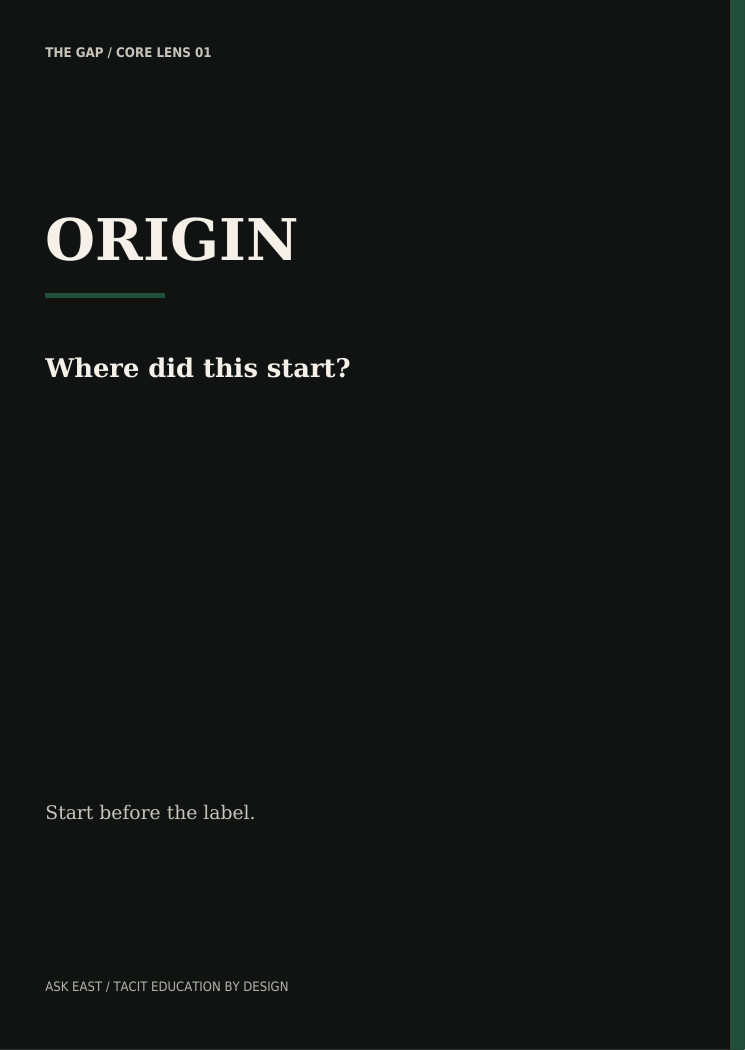
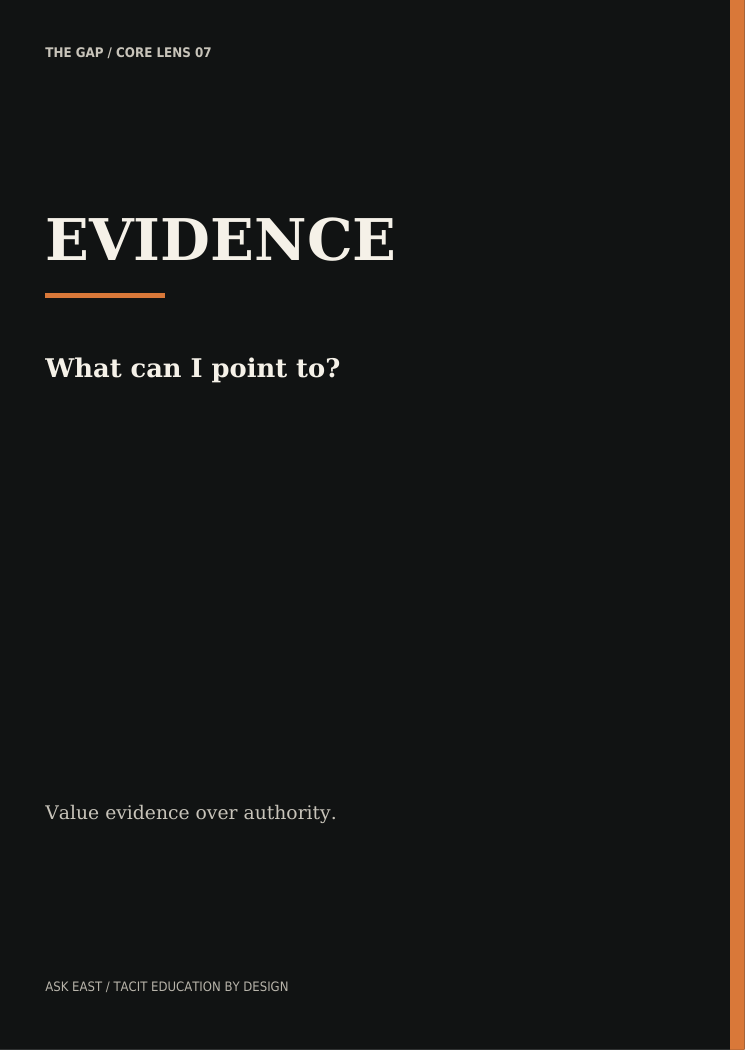
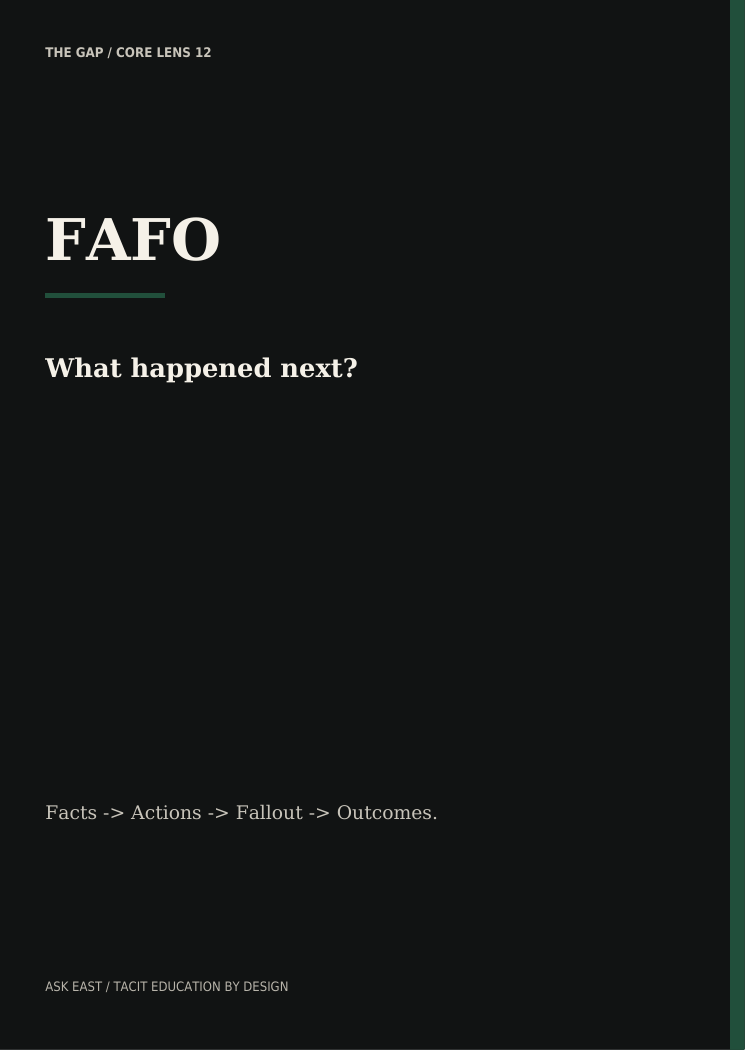
THE GAP Core Lens 01 — OriginTHE GAP Core Lens 07 — EvidenceTHE GAP Core Lens 12 — FAFOA6 · 12 two-sided cards · boxed set01

01 / SEE · Recognition deck

THE GAP

Twelve lenses. One disciplined rewind.An A6 decision deck for separating evidence from assumption and finding the real gap before you act.Pre-release · print master final
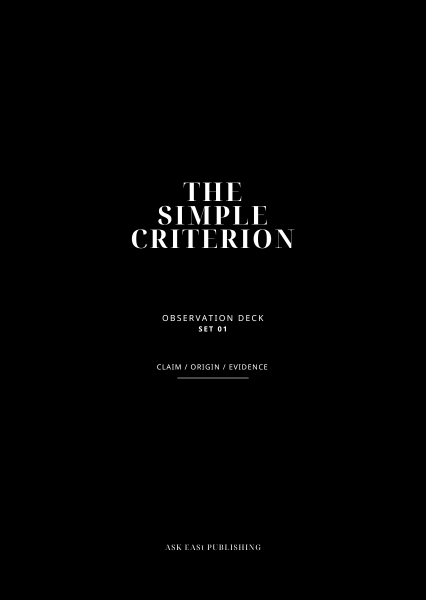
The Simple Criterion observation deck02

02 / TEST · Calibration

The Simple Criterion

Observe before inheriting the conclusion.A practical observation deck for setting the criterion, testing what you can actually see and resisting borrowed conclusions.Pre-release preview
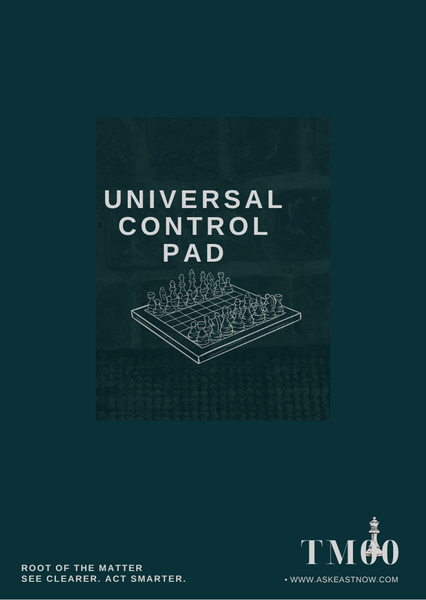
TM00 Universal Control Pad03

03 / CONTROL · Evidence control

TM00

The claim sets the parameters.A universal evidence-control pad for pinning down the claim, sorting fact from inference and tracking what changed.Pre-release preview
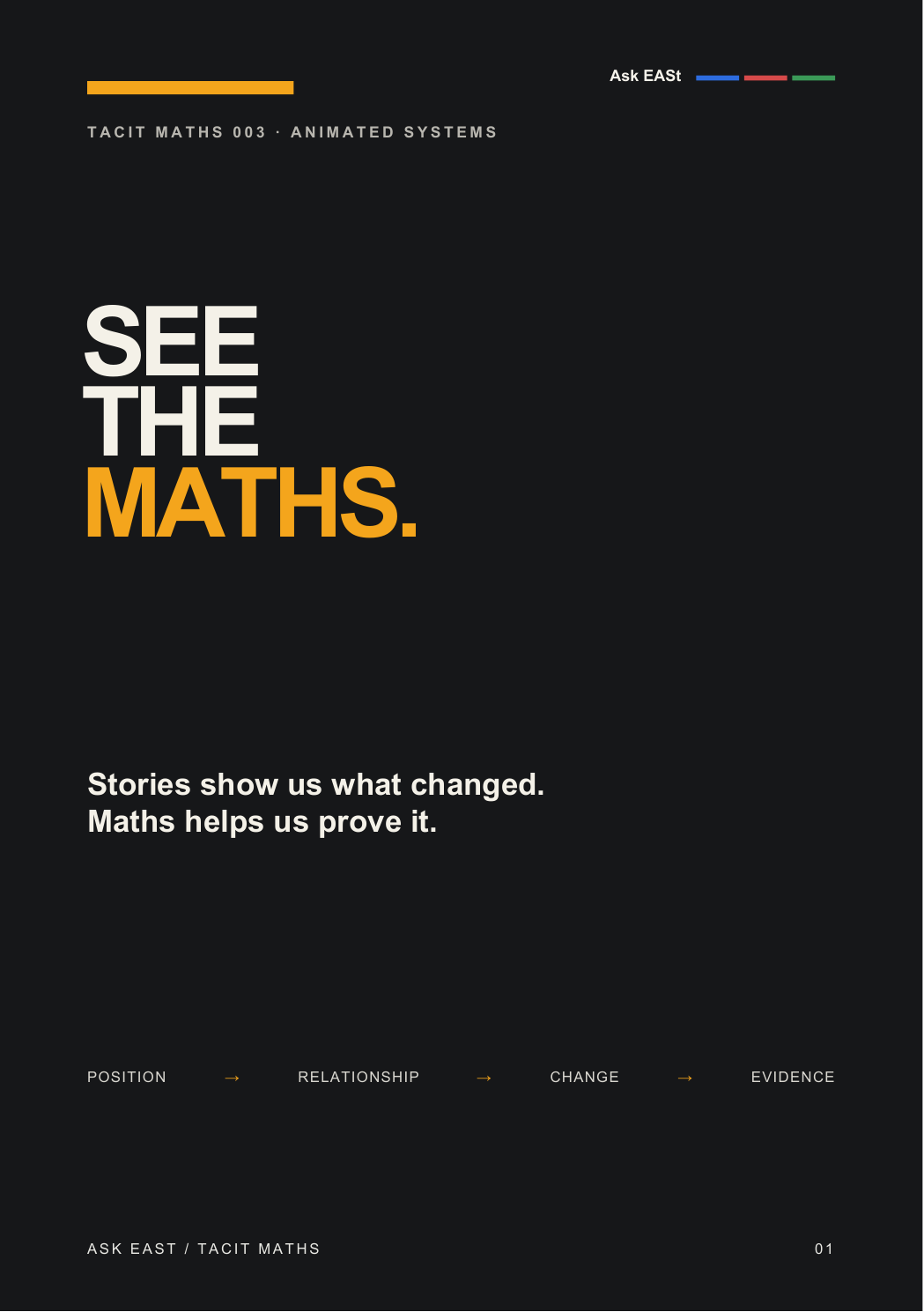
See the Maths flagship cover04

04 / TRANSFER · Curriculum transfer

See the Maths

Stories show what changed. Maths helps us prove it.A 31-page field publication that turns mathematical relationships into visible proof you can read, test and transfer.Pre-release preview

Product visuals are drawn from current Ask EASt masters. Public release is in preparation. No product shown here is currently available for purchase. Format, contents and availability will be confirmed only after each product clears its final release gate.

NSW curriculum transition / 2026 → 2028

The standard is moving.

The transition is no longer approaching. It is underway.

New Year 11 English and Mathematics syllabuses began in 2026. Year 12 implementation follows from Term 4, with the first HSC examinations in 2027. Science 7–10 and several Creative Arts 7–10 syllabuses are also being implemented in 2026, with further changes following.

01 / THE CHANGENew documents. New decisions.

Outcomes, content and assessment requirements must be interpreted and made usable.

02 / THE CONSTANTRecognition still comes first.

Students still need to identify the task, control the evidence and transfer what they know.

03 / THE RESPONSEBuild beyond one syllabus.

Ask EASt maps each product to the pressure point a new document cannot solve by itself.

The transition has started. The resources that survive it are being built now.Tell us what must survive the change
Implementation dates: NSW Education Standards Authority. Ask EASt is an independent educational publisher and is not affiliated with NESA. English 11–12 ↗ · Mathematics 11–12 ↗

Evidence base / Six longitudinal case histories

Built where the method was earned.

The Ask EASt archive includes six long-standing case histories developed through sustained practice, observation and adaptation across changing contexts. They are not short trials or recruited testimonials.

The histories span deliberately different patterns of need, pressure, educational stage and support context. That variation informed the present product architecture and helps test whether its operating logic remains useful beyond the conditions in which it first emerged.

This is structured, longitudinal, practice-led evidence drawn from the historical record. It is not presented as a clinical trial or peer-reviewed research study. Case identities and sensitive details remain private; public claims stay within what the evidence can support.

The reception record / 2016–2022

What people remembered
was being understood.

They described being seen, understood and met with an approach that changed when the person needed it to. At the time, that judgement appeared as access to Tina. The product architecture makes the operating intelligence explicit, portable and accountable. That human pattern is the standard every product must carry.

26archived Facebook recommendations
100% recommend at time captured
Archived reception evidence01 / 04
Tina just ‘gets it’.

A parent describing rapid recognition and connection, 2021

Public recommendations are presented as historical reception evidence, not a guarantee of outcomes. Sensitive family details have been withheld.

What must survive the evolution

Not one person replicated.
The discipline transferred.

01

See the person

Do not mistake visible performance for the whole operating reality.

02

Find the break

Identify where meaning, sequence, pressure or expectation stopped lining up.

03

Make it usable

Reduce complexity into a structure that still works when thinking becomes difficult.

04

Build transfer

Create capability that can travel beyond one subject, person, session or crisis.

Release status

Built carefully.
Released deliberately.

The products shown here are part of the Ask EASt system and are progressing through staged editorial, privacy and production review. They are not yet available to purchase. Formats, contents and availability will be published only after each product clears its final release gate.

Now Public showcaseNext Product specificationsThen Controlled first releases

Help us understand what would be useful

Tell us what brought you here and what you need to understand. We use that signal to decide what should be explained, tested or released next. Working files and proprietary methods are not supplied by default.

Your answers open an email in your own mail app. Nothing is collected silently. Requests are reviewed so updates stay relevant, responsible and useful.

Evidence before hype. Ask EASt’s evidence base is practice-led. Reviews are reception evidence. Products support educational reasoning and decision-making; they do not diagnose conditions, replace professional services or guarantee outcomes.

Publication context. Ask EASt is a product-led educational publisher and does not currently offer public tutoring, mentoring or service sessions. Mentoring is on hold; exceptional requests sit outside Ask EASt’s public offer and may be considered only through EAST ARM’s separately governed IIP following strict referral, without any promise of acceptance or availability. This site documents historical practice and previews company-held intellectual property progressing through staged review.